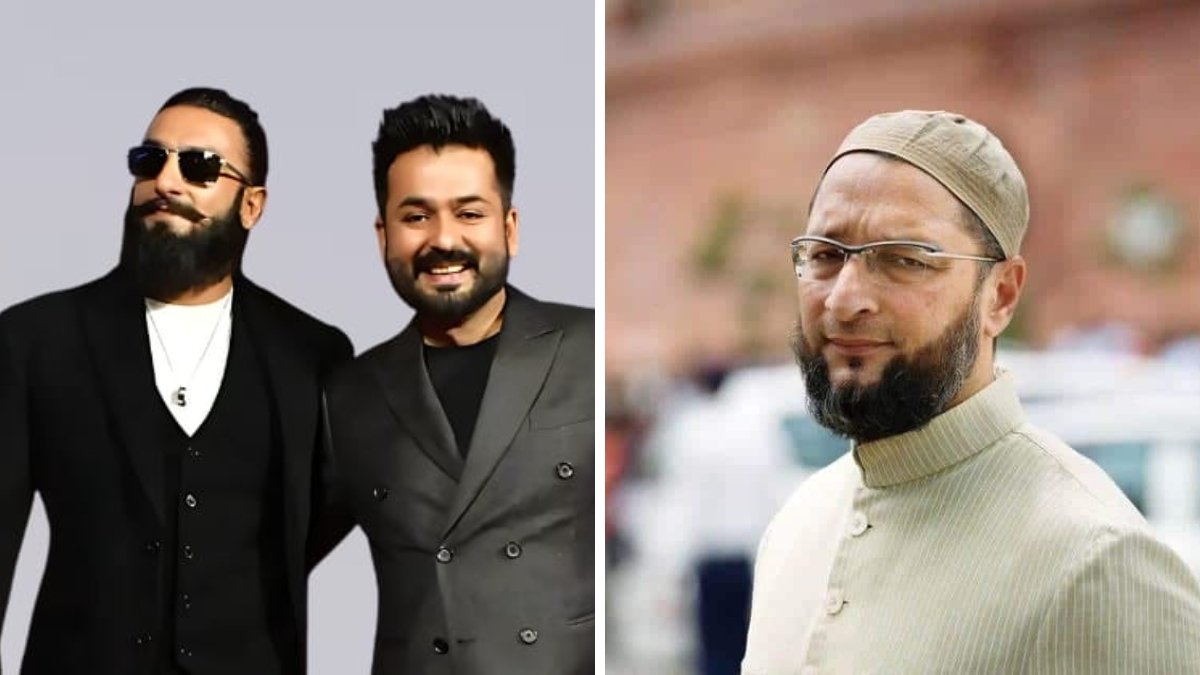
Even as Dhurandhar: The Revenge continues its dream box office run, a sharp political remark has shifted the conversation. Asaduddin Owaisi has openly criticised the film, calling it “three hours of nonsense” and questioning its content—triggering a wider debate about violence, storytelling, and what today’s blockbuster cinema is really saying.
What exactly did Owaisi say about Dhurandhar 2?
The controversy began at a Times Now summit, where Asaduddin Owaisi was asked about the Dhurandhar films. His response was blunt.
“Picture hai vo? Teen ghante bakwaas,” he said, dismissing the film outright.
He added that he doesn’t have time to watch a three-hour film filled with cuss words and violence. More importantly, he questioned the messaging, suggesting that the film leaves audiences wondering whether it encourages hostility toward Muslims.
That line did the damage. And it spread fast.
Dhurandhar 2 controversy vs massive box office success
Here’s where the story gets more layered. While the Dhurandhar 2 controversy is gaining traction, the film itself is unstoppable at the box office.
Directed by Aditya Dhar and starring Ranveer Singh, the sequel has already crossed ₹715 crore in India and over ₹1128 crore globally. It is currently the highest-grossing film of 2026.
Its predecessor, Dhurandhar, had already built a strong foundation with ₹1300 crore worldwide. The sequel simply scaled it bigger—more action, more reach, more noise.
That contrast is impossible to ignore.
A film audiences are celebrating… is also being questioned politically.
What is Dhurandhar 2 about—and why is it being criticised?
The film follows an Indian spy, Jaskirat Singh Rangi, also known as Hamza Ali Mazari, played by Ranveer Singh. Sent on a covert mission to infiltrate a terror network, the narrative unfolds across sensitive geopolitical terrain.
With R Madhavan playing IB director Ajay Sanyal, the story leans heavily into intelligence operations, cross-border tension, and high-stakes conflict.
But this is exactly where criticism emerges.
Films rooted in real-world conflicts often carry layered interpretations. While some viewers see gripping storytelling, others see problematic representation. Owaisi’s remarks reflect that second lens—one that questions whether such narratives unintentionally reinforce stereotypes.
Is the Dhurandhar 2 controversy part of a bigger trend?
The Dhurandhar 2 controversy is not an isolated moment. It fits into a larger pattern in Bollywood.
Over the past few years, high-budget spy thrillers and geopolitically charged films have dominated the box office. Audiences are clearly invested in these narratives.
But political reactions are becoming sharper too.
This creates a growing divide:
- Audience response: Driven by scale, emotion, spectacle
- Critical response: Focused on messaging, identity, and implications
And sometimes, both can exist at the same time.
A small but telling detail—controversy rarely slows a film like this down. If anything, it pulls more attention toward it.
Why Owaisi’s ‘3 hours of nonsense’ remark matters
At first glance, it may sound like just another political opinion on a film. But it taps into a deeper shift in how cinema is consumed and debated today.
Films are no longer just entertainment products. They are cultural signals.
When a blockbuster like Dhurandhar 2 reaches global audiences, its interpretation expands beyond the screen. That’s when reactions like Owaisi’s gain weight—not because they affect box office numbers, but because they shape the conversation around the film.
As the Dhurandhar 2 controversy continues to unfold, one thing is clear—this isn’t just about a film being called “nonsense.” It’s about how blockbuster storytelling, politics, and perception are increasingly colliding in modern Indian cinema.