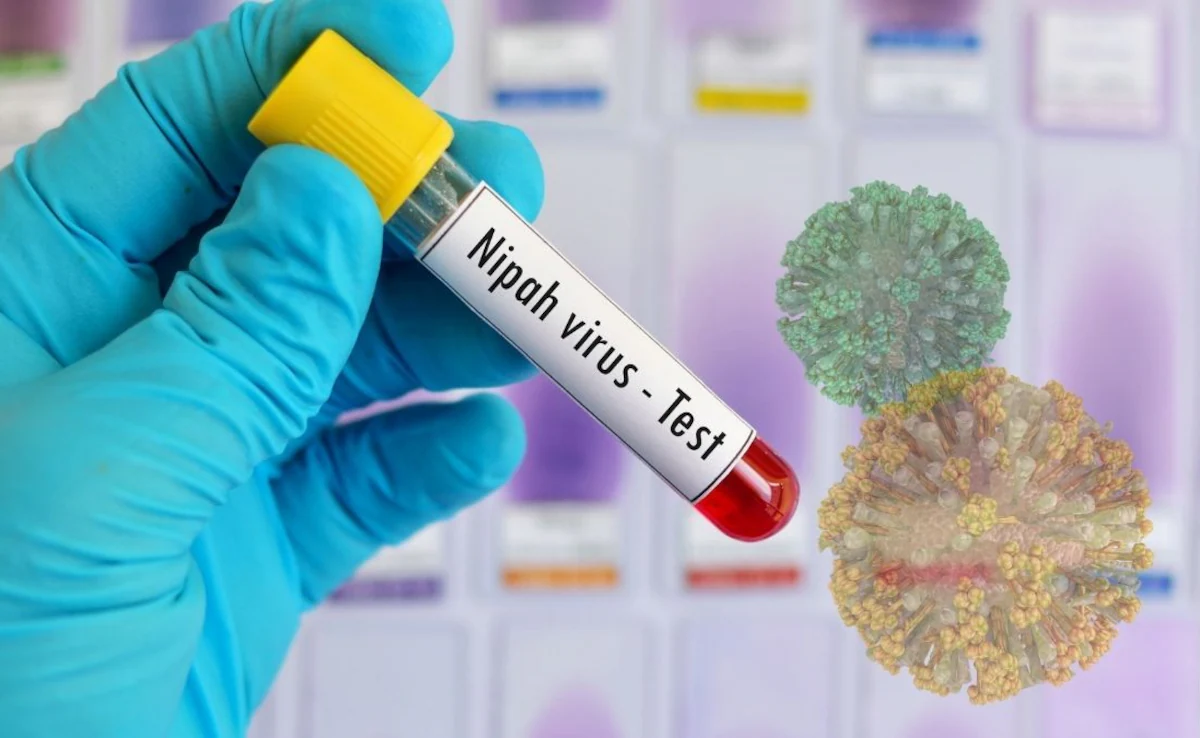
As health authorities remain on guard against the Nipah virus in parts of India and Asia, a new scientific study has brought a cautious note of hope. Researchers in China are exploring whether a drug originally developed to treat Covid-19 could also help fight Nipah, a virus known for its high fatality rate and lack of approved treatment options.
The study was led by scientists from the Wuhan Institute of Virology and focused on an oral antiviral drug called VV116. The researchers found that the drug showed strong activity against the Nipah virus in laboratory tests and animal studies. Their findings were published in the international scientific journal Emerging Microbes & Infections.
According to a report by the South China Morning Post, VV116 is already approved for Covid-19 treatment in China and Uzbekistan. Under experimental conditions, the drug was found to significantly limit the virus’s ability to multiply. In animal testing, particularly on golden hamsters, survival rates improved sharply compared to those that did not receive the drug.
The researchers also observed that VV116 helped reduce the amount of virus present in key organs such as the lungs, spleen and brain, which are often severely affected during Nipah infections. Importantly, the drug appeared to work against both major strains of the virus — the Malaysia strain and the Bangladesh strain. The Bangladesh strain has been linked to recent Nipah outbreaks in India.
Nipah is a zoonotic disease, meaning it can spread from animals to humans, usually through infected bats or pigs, and it can also pass from person to person. Severe cases can lead to breathing problems and brain inflammation, and until now, no antiviral drug has been approved specifically to treat it.
The Wuhan Institute of Virology noted that this is the first study to show the therapeutic potential of VV116 against Nipah. The researchers suggested that the drug could one day be used both to protect high-risk groups, such as healthcare workers, and to treat patients during outbreaks.
VV116 was developed by Chinese biopharmaceutical company Vigonvita Life Science Co. The company said the early data was encouraging and added that it would track outbreak trends closely. If needed, it may consider launching clinical trials for treatment or post-exposure prevention.
Experts involved in the research stressed that more studies are needed to fully understand how the drug works against Nipah. However, they noted that its existing safety record in humans could help speed up further testing.
Meanwhile, in India, two confirmed Nipah cases were recently reported at a private hospital in Barasat in West Bengal’s North 24 Parganas district. The Union Health Ministry said 196 contacts linked to these cases have been identified, tested and found to be asymptomatic and negative. The ministry urged the public to stay calm and rely only on official updates, even as vigilance remains high across the region.