Long before modern cities took shape, Kanchipuram was already thriving as a place of faith, learning, and artistry. Located in Tamil Nadu, about 70 kilometers from Chennai, this ancient city is widely known as the City of a Thousand Temples, a name that reflects its deep spiritual roots and extraordinary heritage. Even today, Kanchipuram feels like a space where history and devotion quietly coexist, drawing pilgrims and curious travelers from across the world.
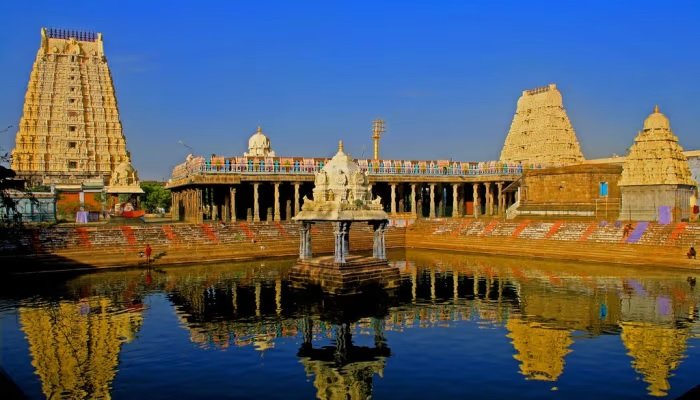
The city earned its famous title because of the sheer number of temples that once stood here. While not all of them have survived the passage of time, many remarkable structures still remain, showcasing the architectural brilliance of the Pallava, Chola, and Vijayanagara dynasties. These temples are more than monuments; they are living spaces of worship, filled with intricate stone carvings, towering gopurams, and sanctums that have witnessed centuries of prayer and ritual.
One of the most significant landmarks is the Kailasanathar Temple, dedicated to Lord Shiva. Considered the oldest temple in Kanchipuram, it is a striking example of Pallava architecture, known for its sandstone carvings and peaceful surroundings. Another major attraction is the Ekambareswarar Temple, among the largest temple complexes in South India. Inside its vast grounds stands a sacred mango tree believed to be thousands of years old, adding to the temple’s spiritual importance. The Varadharaja Perumal Temple, dedicated to Lord Vishnu, is equally revered and is especially famous for its grand festivals and beautifully detailed sculptures.
Kanchipuram’s identity is not limited to temples alone. The city is also world-famous for its silk saris, particularly the richly woven Kanchipuram silk that uses gold thread and traditional designs. Walking through the weaving neighborhoods offers a glimpse into the lives of skilled artisans who continue age-old techniques passed down through generations. This connection between devotion and craftsmanship gives Kanchipuram a unique character, making it a center of living heritage rather than just a historical site.
Reaching Kanchipuram is easy, especially from Chennai, with frequent buses and trains connecting the two cities. The most comfortable time to visit is between October and March, when the weather is pleasant and many temple festivals take place. Summers can be intense, while the monsoon season often brings heavy rainfall, so planning ahead helps. Visitors can choose from basic guesthouses and mid-range hotels in Kanchipuram, while those seeking luxury often stay in Chennai and travel in for the day. Within the city, auto-rickshaws and taxis are convenient, and many temples are close enough to explore on foot.
Visitors are expected to follow temple customs, including wearing modest clothing and removing footwear before entering. Photography rules vary, especially near sanctums, so it’s best to ask before clicking pictures. Early mornings are ideal for temple visits, offering a calm atmosphere filled with rituals and chants. Festivals like Panguni Uthiram and Vaikunta Ekadasi transform the city with processions, music, and vibrant celebrations.
Beyond Hinduism, Kanchipuram also reflects India’s layered religious history. It was once an important center for Buddhism and Jainism, and traces of these traditions survive through inscriptions and historical records. This spiritual diversity adds depth to the experience of exploring the city.
Food in Kanchipuram is rooted in traditional Tamil vegetarian cuisine. One local specialty is the Kanchipuram idli, a spiced version of the classic dish often served as temple offering. Simple eateries serve meals on banana leaves, while nearby Chennai provides access to a wider range of cuisines, rounding off a visit that nourishes both the soul and the senses.