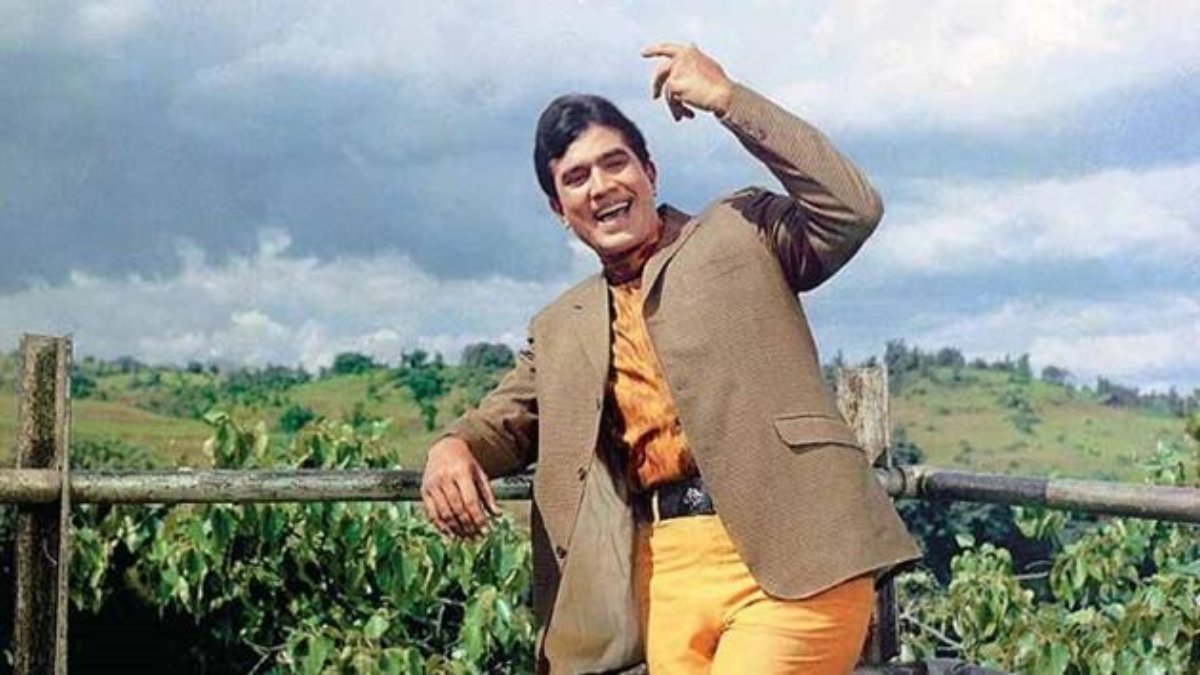
Rajesh Khanna didn’t just become a star. He became a phenomenon. In the late 1960s and early 1970s, he redefined what fame meant in India, creating a template of superstardom that every actor since has chased but few have matched.
Born Jatin Khanna on December 29, 1942, in Amritsar, he was adopted by his uncle and aunt and raised in Mumbai. After winning a talent competition organized by Filmfare and United Producers, Khanna entered Bollywood with Aakhri Khat in 1966. The film flopped, but it didn’t matter. Something about him—his eyes, his understated charisma, his ability to convey longing without melodrama—caught the industry’s attention.
The Golden Streak That Changed Bollywood
Between 1969 and 1971, Rajesh Khanna delivered 15 consecutive solo hit films. Fifteen. Aradhana, Do Raaste, Kati Patang, Sachaa Jhutha, Anand, Amar Prem—each one a cultural moment. Women fainted at his premieres. Fans wrote letters in blood. He received more fan mail than any actor in the world during those years, a Guinness record that still stands in spirit if not in official books.
His pairing with directors like Hrishikesh Mukherjee and Shakti Samanta, composers like R.D. Burman and S.D. Burman, and heroines like Sharmila Tagore and Mumtaz created magic that still plays on Sunday mornings across India. Songs like “Mere Sapno Ki Rani” and “Zindagi Kaisi Hai Paheli” are etched into the nation’s DNA.
But here’s what made Khanna different: he wasn’t a dancer, wasn’t an action hero, didn’t have a chiseled physique. He was romantic, introspective, vulnerable. He played dying men beautifully. In Anand, he made an entire country cry for a character who knew he had months to live and chose to laugh anyway.
The Slow, Painful Decline
By the mid-1970s, cracks began to show. Amitabh Bachchan arrived with Zanjeer in 1973, and the angry young man replaced the romantic dreamer. Audiences wanted grit, not melancholy. Khanna’s string of flops began to pile up. His personal life—marriage to Dimple Kapadia at the height of his fame, followed by separation—became tabloid fodder.
He kept working, appearing in films through the 1980s and 1990s, but the magic was gone. The man who once had producers begging for dates now struggled to fill theaters. There were comeback attempts—Souten (1983) was a hit, Avtaar (1983) worked—but they were exceptions, not the rule.
The Final Years: Companionship in the Shadows
By the 2000s, Rajesh Khanna had largely retreated from public life. He lived at his Bandra bungalow, Aashirwad, surrounded by memories and a shrinking circle of friends. During this period, Anita Advani, an actress who had worked in films like Shalimar and Daasi, became a constant presence in his life.
The exact nature of their relationship remained unclear to the public. Anita later claimed they were married in private, though no official records surfaced. What’s undeniable is that she was with him during years when fame had faded and loneliness set in—a companion during a chapter of his life that Bollywood preferred not to discuss.
His health deteriorated through 2011 and 2012. Dimple Kapadia, despite their long separation, returned to care for him during his final months.
Death and the Legal Battle That Followed
On July 18, 2012, Rajesh Khanna passed away at the age of 69. His funeral drew thousands. Politicians, actors, and fans lined the streets. It was a final reminder of what he once was: the first true Bollywood superstar.
But his death didn’t bring closure. Within a year, legal disputes erupted over his estate. Anita Advani filed a lawsuit in 2013, claiming she had been forcibly removed from Aashirwad and had never been shown his will. The case remains unresolved in 2025, over 13 years after his death—a messy epilogue to an already complicated life.
His legacy isn’t just in box office records or awards. It’s in every actor who plays vulnerability as strength, every romantic hero who doesn’t need muscles to make hearts skip. Rajesh Khanna proved you could be ordinary-looking and still be the biggest star in the country. That’s a kind of magic Bollywood hasn’t seen since.
But the legal battles over his final years and estate have raised uncomfortable questions about how the industry treats those who loved its legends in the shadows—and what happens when they refuse to stay silent.
The unresolved legal battle over Rajesh Khanna’s estate continues to make headlines, with Anita Advani insisting her fight is about dignity, not money, in a recent interview that has reopened old wounds and unanswered questions.