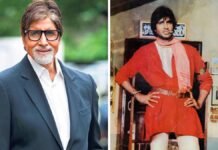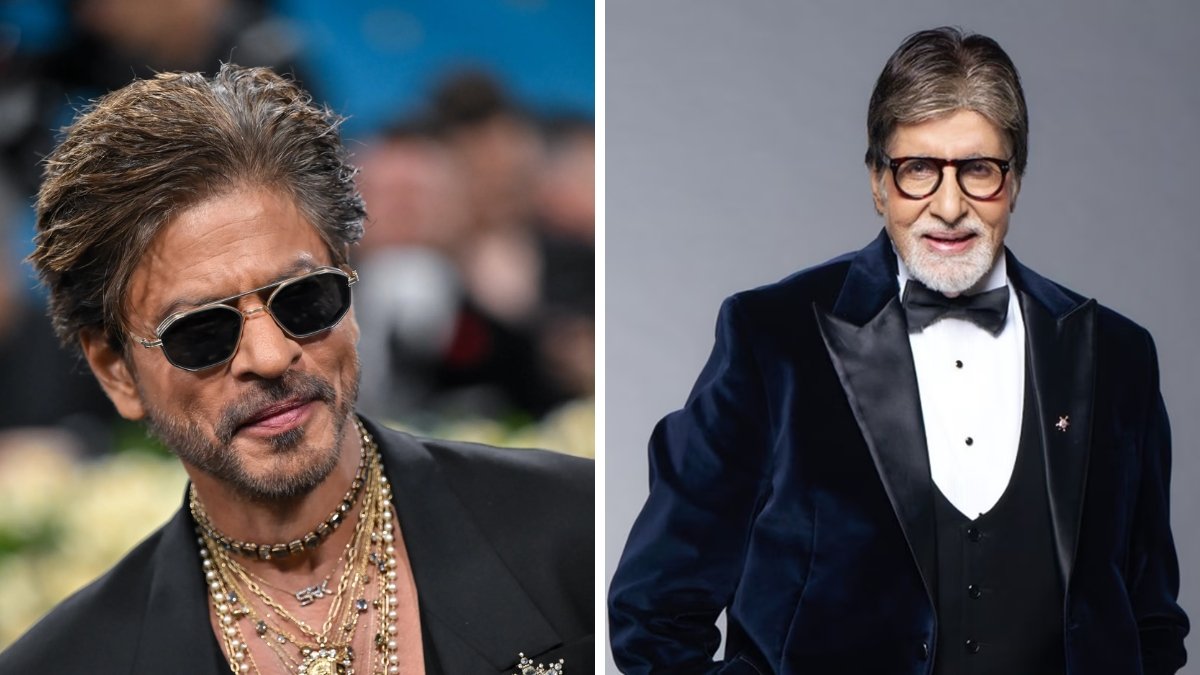
Most filmmakers dream of working with Shah Rukh Khan or Amitabh Bachchan. Sudip Sharma does not. In fact, he never has. The writer-director behind Paatal Lok and Kohrra said so openly in a recent interview with Digital Commentary. And the numbers behind his career make his stance very difficult to dismiss.
“No, I never had that desire,” Sharma said. “I never came here to work with a specific star. I came here to tell my own story — the kind of story I wanted to tell, the kind of films I had watched and loved. That has never been a fascination for me. In fact, even if the opportunity came, I would be nervous. It is a huge responsibility.”
This is a bold thing to say in Bollywood. However, for Sharma, it is simply the truth he has always worked by.
The Star Vehicle Problem — and Why It Matters Now
Sharma did not stop at personal preference. Instead, he explained the structural reason behind his thinking.
“A star comes with a certain image,” he said. “You then have to build a vehicle around that image. I don’t know how to do that. I want to write a character, and whoever plays it should immerse themselves in it completely. I don’t want to think about how fans will react or how stardom will affect it. Often, more discussion happens around that than the film itself. I have no interest in any of that.”
This is not just one filmmaker’s quirk. It is, in fact, a growing pattern across India’s best-performing OTT content. Consider this: the creators behind Delhi Crime, Panchayat, Kota Factory, and Mirzapur all share one trait with Sharma. They built their biggest successes without leaning on Bollywood’s biggest names. Moreover, the actors they chose — Jaideep Ahlawat, Jitendra Kumar, Barun Sobti — became stars because of the work, not despite the absence of fame. The story made the star, not the other way around.
This is the pattern Bollywood’s traditional model has long refused to acknowledge. And it is costing the industry dearly.
A System Under Pressure
The star-vehicle model is not simply a creative choice. It is Bollywood’s primary financial engine — and right now, that engine is misfiring badly. Up to 50% of a mainstream Hindi film’s budget can go directly to a single star’s fee. That leaves very little for script development, supporting cast, and the craft that determines whether audiences actually return. When the star fails to deliver at the box office — and in 2024 and 2025, even the biggest names have struggled — there is no storytelling foundation left to catch the fall.
Meanwhile, streaming platforms that chased star power through expensive theatrical acquisitions and big-budget franchise series have largely seen weaker engagement. By contrast, character-driven originals with lesser-known faces continue to outperform expectations and generate sustained audience conversation — often years after release.
Sharma built his entire career on the alternative model. And it is clearly working.
From NH10 to Netflix’s Global Top 10
Sharma’s path was neither fast nor flashy. He made his screenwriting debut with NH10 (2015), a sharp thriller starring Anushka Sharma that drew from real-life honour killing cases. After that, he wrote Udta Punjab and Sonchiriya — both critically praised, both commercially underwhelming. The traditional box office, with its dependence on star power and opening-weekend spectacle, was never his natural habitat.
OTT, however, was a different story entirely.
Paatal Lok arrived on Amazon Prime Video in 2020 and immediately changed the conversation around Indian streaming. It turned Jaideep Ahlawat — a talented actor who had spent years in minor roles — into one of the most talked-about performers on Indian television. Furthermore, the show became a long-term cultural reference point, not just a trending title. That is a meaningful distinction in a world where most content disappears within a week of release.
Next came Kohrra on Netflix — a Punjab-set murder mystery that built its world around institutional failure, family shame, and quiet devastation. Then, Sharma raised the stakes further. He co-directed Kohrra Season 2 alongside writing it — starring Barun Sobti and Mona Singh, with Rannvijay Singha and Pooja Bhamrrah in key roles. The response was immediate. The season drew 1.6 million views in its first week alone. It also entered Netflix’s global Top 10 non-English shows ranking. All of this without a single A-list Bollywood face in the cast.
The Pattern That Is Reshaping Indian Cinema
So what does this tell us? Quite a lot, actually.
Across India’s most globally successful streaming titles, a clear pattern keeps emerging. The shows that travel furthest — the ones that land on global charts and stay in conversations long after launch — are built around character specificity and storytelling discipline. They are not built around star image management. Richie Mehta’s Delhi Crime fits this pattern. So does Panchayat. So does every season of Paatal Lok and Kohrra.
Consequently, platforms are beginning to shift. The expensive experiment of importing theatrical star power into streaming has delivered inconsistent results. Therefore, commissioning decisions are gradually moving back toward what the data keeps confirming: audiences, especially global ones, follow great stories. They follow stars only when the story gives them a reason to.
Sharma has understood this for a decade. His résumé is proof that the understanding was correct.
Not a Dismissal — A Different Philosophy
It is important to be clear about what Sharma is not saying. He is not arguing that Shah Rukh Khan or Amitabh Bachchan cannot act. He is not dismissing their contribution to Indian cinema. Rather, he is identifying something more precise: the system built around their stardom is incompatible with the way he works. Managing an icon’s image, navigating fan expectations, and serving commercial obligations would compromise the very thing that makes his storytelling worth watching.
As a result, he has simply chosen a different path. And that path has led him to a global Top 10 ranking, critical acclaim across two major platforms, and a reputation as one of the most important voices in Indian content today.
He never needed a superstar. He needed a story. Clearly, the audience agreed.
Kohrra Seasons 1 and 2 are currently available to stream on Netflix.