Just when it feels like social media has shown us every possible diet hack, a new and disturbing trend has taken over feeds. Across platforms, videos of young people trying extreme methods to control their weight are gaining millions of views. The latest one is not just unusual, it has left experts seriously worried.
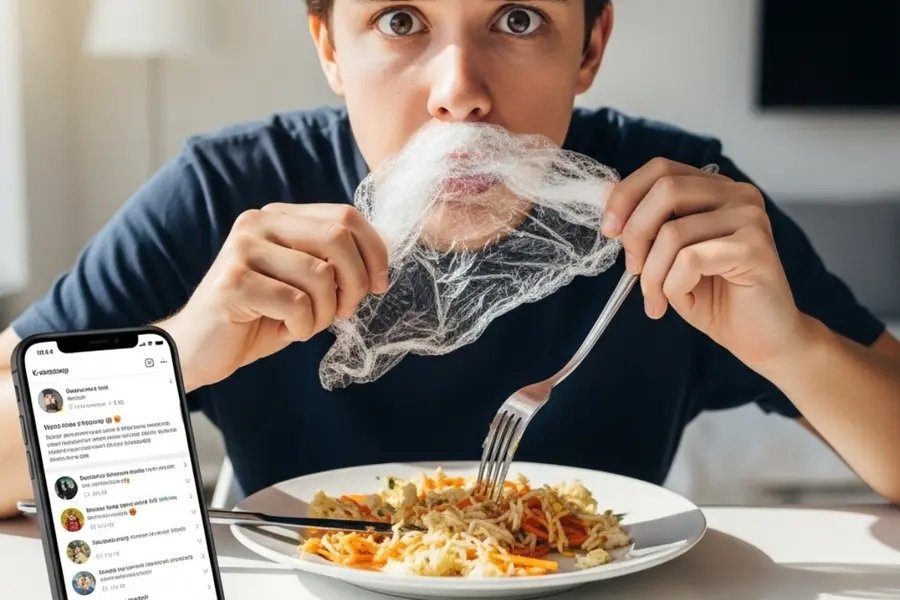
In China, some young users have begun following what is being called the “plastic eating” or “cling wrap diet”. The trend has spread quickly on TikTok, Douyin, and X, where short clips show participants wrapping plastic over their mouths, placing food inside, chewing it, and then spitting it out instead of swallowing.
The idea behind it is simple but misleading. Supporters believe that chewing food can trick the brain into feeling full, while spitting it out avoids calorie intake. They claim this helps control cravings and manage weight. However, health professionals say there is no scientific evidence to prove that this method actually leads to weight loss.
Beyond being ineffective, the trend may also be dangerous. Research published by the National Institutes of Health highlights the risks linked to microplastics entering the body. Tiny plastic particles can irritate the digestive system, causing stomach pain, bloating, or nausea. If inhaled, they may lead to coughing or breathing problems. Certain chemicals found in plastics, such as BPA, can interfere with hormones and metabolism. Long-term exposure has also been linked to inflammation in organs like the liver and lungs.
Experts are equally concerned about the mental health impact. Chewing and spitting food can create an unhealthy relationship with eating and may mirror behaviors seen in eating disorders. Constant exposure to such trends can increase body image anxiety and obsessive thoughts about weight, potentially leading to serious conditions like bulimia.
Doctors stress that there is no shortcut to healthy weight management. Skipping proper nutrition often leads to stronger hunger later and possible overeating. Viral quick fixes may grab attention, but they are rarely safe or sustainable solutions.