

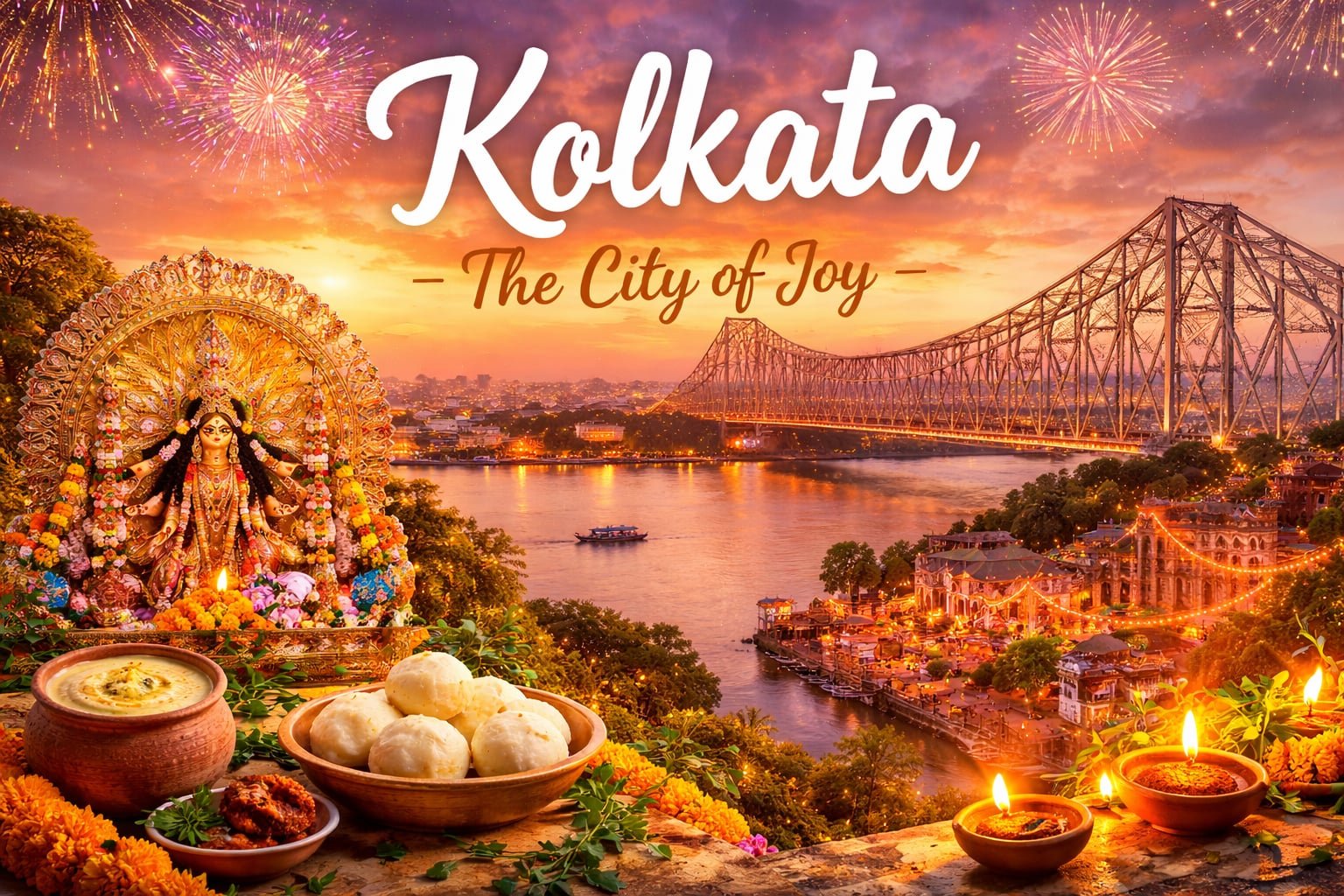
Some cities are known for their skyline. Others for their history. But Kolkata is known for something far more special, its spirit. The capital of West Bengal carries the beautiful title of the “City of Joy,” and the reason behind this name is as emotional as it is inspiring.
Popularized by Dominique Lapierre’s novel, the nickname reflects the city’s ability to find happiness even amid challenges.
Kolkata, the capital of West Bengal, is famously known as the “City of Joy.” The name reflects not only its rich cultural heritage and vibrant festivals but also the warmth and resilience of its people, who find happiness even amid challenges.
The phrase “City of Joy” was popularized by Dominique Lapierre’s 1985 novel of the same name, which depicted life in Kolkata’s slums and highlighted the spirit of joy and community that thrived despite hardship. Over time, the title stuck, and today Kolkata is celebrated worldwide under this affectionate moniker.
Kolkata’s identity as the City of Joy is deeply connected to its history and culture. Once the capital of British India, the city still showcases colonial architecture, wide avenues, and iconic landmarks like the Victoria Memorial and Howrah Bridge. At the same time, it is known for its intellectual strength. The city has been home to Nobel laureates such as Rabindranath Tagore and Amartya Sen, as well as respected institutions like Presidency University and the Indian Statistical Institute. For decades, Kolkata has been a centre for literature, art, and political thought, earning it the title of India’s cultural capital.
Festivals are another reason the city truly lives up to its name. Durga Puja is celebrated with unmatched grandeur, turning Kolkata into a breathtaking display of lights, artistic pandals, and joyful community gatherings. The celebration is not limited to a particular class, neighbourhoods across the city participate with equal enthusiasm, filling the air with music, laughter, and the aroma of festive food. Beyond Durga Puja, the city celebrates Christmas, Eid, and many other festivals with the same warmth, reflecting its inclusive and pluralistic nature.
Food adds another layer to Kolkata’s joyful identity. From street-side puchkas and kathi rolls to beloved sweets like mishti doi and rosogolla, the city’s cuisine is part of its soul. In Kolkata, eating is more than just a daily routine, it’s a shared experience that brings people together, whether in crowded markets or old coffee houses.
What truly makes Kolkata deserving of the title is the resilience of its people. Despite economic struggles and infrastructural challenges, the city thrives on a strong sense of community. Neighbours support one another, strangers strike up conversations in trams and tea stalls, and art and music are woven into everyday life. It is this ability to find joy in small, simple moments, even during difficult times, that makes Kolkata stand out.
The city’s artistic and intellectual legacy also adds to its charm. It has produced filmmakers like Satyajit Ray, who brought Indian cinema global recognition, and continues to nurture theatre, poetry, and visual arts. Book fairs, film festivals, and cultural events are a regular part of life here, keeping creativity alive in every corner.
Kolkata’s title as the City of Joy is not about ignoring its struggles. Instead, it recognises the unique spirit that defines it. Joy is present in children playing cricket in narrow lanes, in friends sharing cups of chai, and in the pride people feel for their culture and history. For visitors, Kolkata offers more than monuments and markets, it offers warmth, humanity, and memories that stay long after the journey ends.

