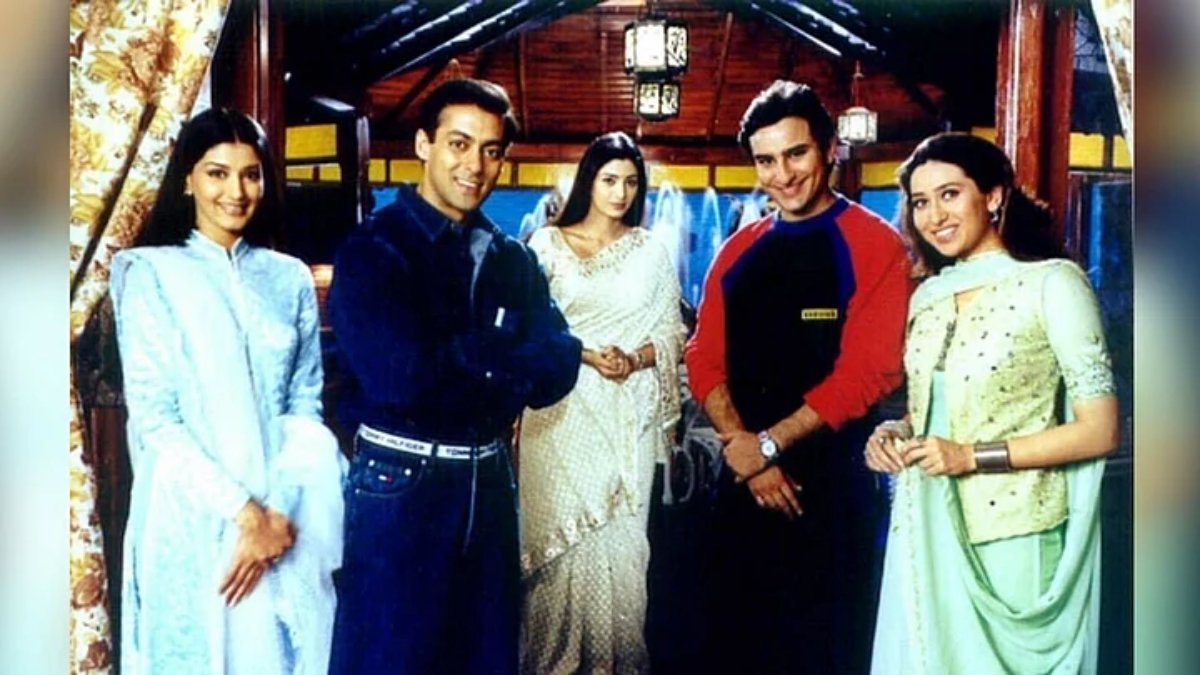
Sooraj Barjatya made the most beloved family film in Indian cinema history. For decades, that film defined how mainstream Bollywood imagined Indian womanhood. Now, three decades later, the same filmmaker says that version of womanhood is simply over — and his own sets are proof of just how much has changed behind the camera, not just on screen.
‘That Version of Women Sitting at Home Is Over’
Barjatya’s new JioHotstar show, Sangamarmar, centres on a woman who steps up to run her father’s business after his sudden death. It is a deliberate creative choice. Speaking to Hindustan Times, the filmmaker said plainly, “Agar main aaj bhi sochoon ki ghar pe baithengi ladies, that is over.”
For Barjatya, this shift is not a rejection of the values his films have always celebrated. Instead, he sees career ambition and family commitment as forces that can, and must, coexist in modern Indian storytelling.
Why Hum Aapke Hain Koun Still Matters Here
Released in 1994, Hum Aapke Hain Koun remained India’s highest-grossing film for well over a decade. Its vision of a large, warm, interdependent family struck something deep in Indian audiences. However, Barjatya is clear-eyed about what that era represented and what it cannot represent anymore.
“You cannot make a Hum Aapke Hain Koun where everybody lives together, because it’s not possible today,” he said. “But the values remain the same.” That is a significant distinction — separating the structure of a story from the soul of it.
The Real Change Is Behind the Camera
This is where Barjatya’s interview becomes genuinely revealing. He points not just to the scripts, but to who is actually present on his sets. “My sets have more women than men today,” he said. “When I started, the only women were the actresses, their mothers, and hairdressers.”
That is not a small shift. Therefore, the way stories are conceived, designed, and executed has changed because the room itself has changed. Barjatya credits women crew members with bringing sharper attention to costumes, production design, and set detail. “The number of kitchen sets and temples I have put on screen, no one else has. That is where women come in with new ideas,” he said.
But Authority on Set Remains a Quiet Struggle
Even so, Barjatya does not paint an entirely optimistic picture. Women in positions of power on his sets, he admits, still find it hard to command authority over male colleagues. “They say it is so difficult to give orders to men,” he noted. Furthermore, he shared that women on his crew have told him directly: they must manoeuvre by massaging egos just to get their work done.
It is a candid, uncomfortable admission — and a rare one from a filmmaker of his stature. Consequently, it adds real weight to an otherwise promotional conversation.
Sangamarmar and What Comes Next
Sangamarmar, currently streaming on JioHotstar, stars Sheen Savita Dass alongside Sourabh Raaj Jain. The show carries forward Barjatya’s signature warmth while placing a working woman at its centre — a combination that, for this filmmaker, represents the natural next chapter.
Barjatya hopes the authority gap on film sets will close with time. Given that he has spent thirty years quietly watching, and shaping, how Indian families see themselves on screen, that hope carries more than a little weight.