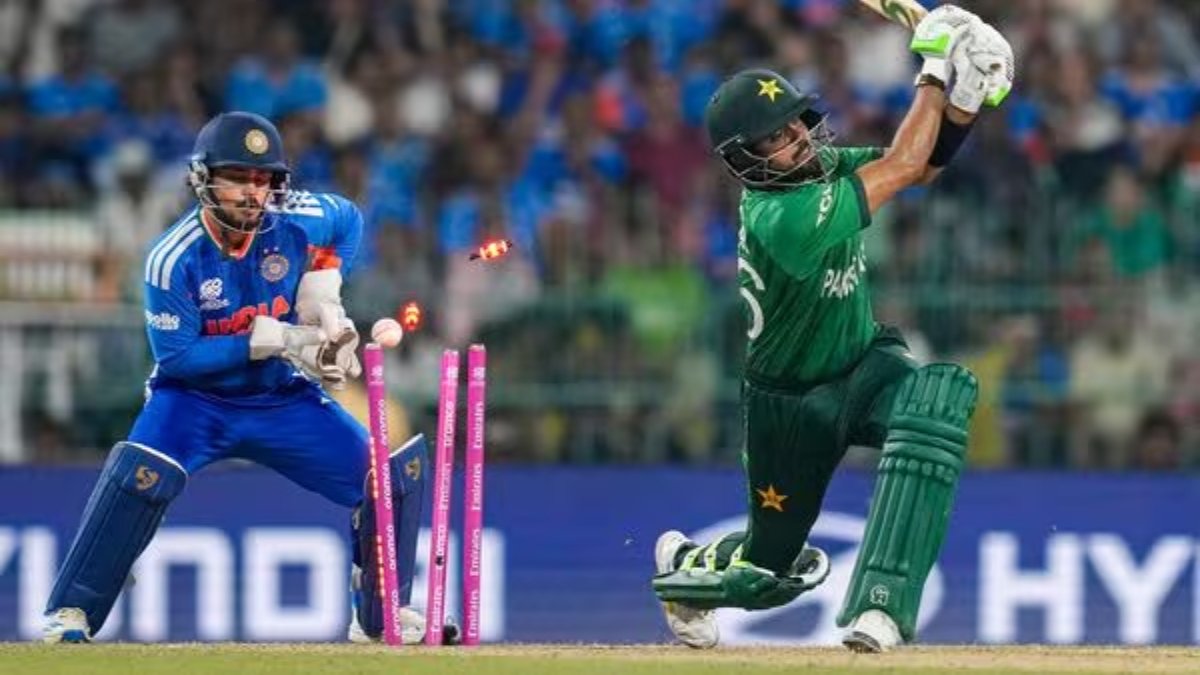
Babar Azam is Pakistan’s most technically gifted batter, a run-machine in bilateral series, and a captain who commanded respect across formats. Yet when the stakes are highest—T20 World Cups, India clashes, knockout matches—Babar’s output shrinks dramatically. His 5 off 7 balls against India in the 2026 T20 World Cup was the latest chapter in a troubling pattern.
The numbers don’t lie. In high-pressure matches, Babar Azam is a shadow of the player who averages 40+ in T20Is overall. Here’s the statistical breakdown of cricket’s most confounding paradox.
Babar Azam vs India: A Dismal Record
T20Is vs India: 8 matches, 124 runs, average 15.5, strike rate 107
T20 World Cups vs India: 3 matches, 18 runs, average 6, strike rate 90
Compare this to his overall T20I record: 4,023 runs at an average of 41.25 and strike rate of 130. Against India, Babar’s average drops by 25 runs, and his strike rate plummets below 110. In T20 World Cups specifically, he’s been anonymous.
Notable failures vs India:
- 2021 T20 WC (Dubai): 0 off 3 balls (Pakistan won, but Babar contributed nothing)
- 2022 T20 WC (Melbourne): 4 off 8 balls
- 2024 T20 WC (New York): 9 off 11 balls
- 2026 T20 WC (Colombo): 5 off 7 balls
In four consecutive T20 World Cup matches against India, Babar has scored 18 runs total—fewer than Ishan Kishan scored in one over against Pakistan in 2026.
Knockout and Elimination Matches: Invisible When It Counts
Babar’s struggles extend beyond India. In T20 World Cup knockout stages and elimination matches, his record is alarmingly poor:
- 2021 T20 WC semifinal vs Australia: 39 off 34 (Pakistan lost)
- 2022 T20 WC final vs England: 32 off 28 (Pakistan lost by 5 wickets)
- 2024 T20 WC semifinal vs South Africa: 15 off 14 (Pakistan eliminated)
His strike rates hover around 110-115 in these matches—acceptable in ODIs, death by slow batting in T20s. While teammates like Mohammad Rizwan provide stability, Babar’s inability to accelerate in crunch overs leaves Pakistan chasing uncompetitive totals or falling short in chases.
The Technical Flaw: Anchor, Not Aggressor
Babar’s technique is flawless. His cover drives are textbook, his timing exquisite. But in T20 cricket’s modern era, technique alone isn’t enough. The format demands calculated violence—something players like Virat Kohli, Jos Buttler, and Suryakumar Yadav have mastered.
Babar’s approach is that of an anchor. He accumulates, rotates strike, waits for bad balls. This works in bilateral series against weaker attacks. Against elite bowling in high-stakes matches, it strangles innings.
Stat comparison (T20 World Cups since 2021):
| Player | Matches | Runs | Avg | SR | Sixes |
|---|---|---|---|---|---|
| Babar Azam | 18 | 412 | 25.75 | 118 | 8 |
| Virat Kohli | 15 | 589 | 65.44 | 135 | 12 |
| Jos Buttler | 16 | 478 | 31.87 | 142 | 18 |
Babar’s strike rate of 118 is the lowest among top-order batters in T20 World Cups since 2021. His six-hitting rate (one six every 51 balls) is almost half that of peers. In a format where intent matters as much as execution, Babar’s conservative approach is a liability.
Pressure Amplification: The Mental Block
Statistics suggest a mental block. Babar’s average in non-pressure T20Is (bilateral series, group-stage dead rubbers) is 48. In matches where qualification, elimination, or national pride is at stake, it drops to 22. That’s a 26-run differential—the largest among active batters with 50+ T20I caps.
The 2026 match against India was a microcosm. Coming in at No. 4 with Pakistan reeling at 13/3, Babar played 7 cautious deliveries, scored 5, and fell to Axar Patel without ever threatening. His dismissal effectively ended the chase.
Cricket psychologists point to overthinking under pressure. Where players like Kohli thrive on adrenaline, Babar appears paralyzed by it. His shot selection becomes tighter, his footwork stiff, his scoring zones narrower.
Captaincy Burden: Did Leadership Make It Worse?
Babar Azam stepped down as Pakistan captain in late 2024 after a string of disappointing results. Some analysts argue the captaincy burden worsened his personal form—tactical decision-making, media scrutiny, and player management added mental load.
Interestingly, Babar’s batting average improved marginally after relinquishing captaincy (26 in last 10 T20Is as non-captain vs 23 in last 10 as captain). But the pressure-match failures persisted. The 5 off 7 against India in 2026 came while Salman Agha was captain—Babar had no leadership responsibilities, yet still failed.
This suggests the issue isn’t captaincy—it’s Babar’s fundamental approach to high-pressure situations.
Comparisons to Kohli: Different Mentalities
Virat Kohli, Babar’s contemporary and stylistic peer, offers a stark contrast. Both are technically gifted, both anchor their teams’ batting lineups. But Kohli thrives in pressure; Babar shrinks.
Kohli’s record in T20Is vs Pakistan: 492 runs, average 49.2, strike rate 125
Babar’s record in T20Is vs India: 124 runs, average 15.5, strike rate 107
Kohli’s two iconic T20 World Cup knocks against Pakistan—82* in Melbourne 2022 and 55* in Kolkata 2016—are textbook examples of pressure absorption. Babar has no equivalent moment.
The difference lies in mindset. Kohli attacks pressure; Babar defends against it. One views crunch matches as opportunities; the other sees them as threats.
Can Babar Fix This?
At 30, Babar Azam still has time to rewrite his high-pressure narrative. But it requires fundamental changes:
- Aggressive intent from ball one: No more “settling in” for 10-15 balls
- Six-hitting practice: Elite T20 batters clear boundaries; Babar must too
- Sports psychology: Mental conditioning to handle billion-viewer scrutiny
- Role clarity: Pakistan must decide if he’s an anchor or aggressor—playing both roles half-heartedly serves neither
Without these changes, Babar risks being remembered as a flat-track bully—a batter who piled runs in comfort but disappeared when glory was on the line.
The Verdict
Babar Azam is undeniably talented. His bilateral stats are superb. But cricket immortality is earned in World Cup semifinals, India clashes, and do-or-die eliminations. By that measure, Babar has fallen tragically short.
His 5 off 7 against India in 2026 wasn’t an anomaly. It was a pattern—one that Pakistan must address if they ever hope to beat their archrivals when it matters most.