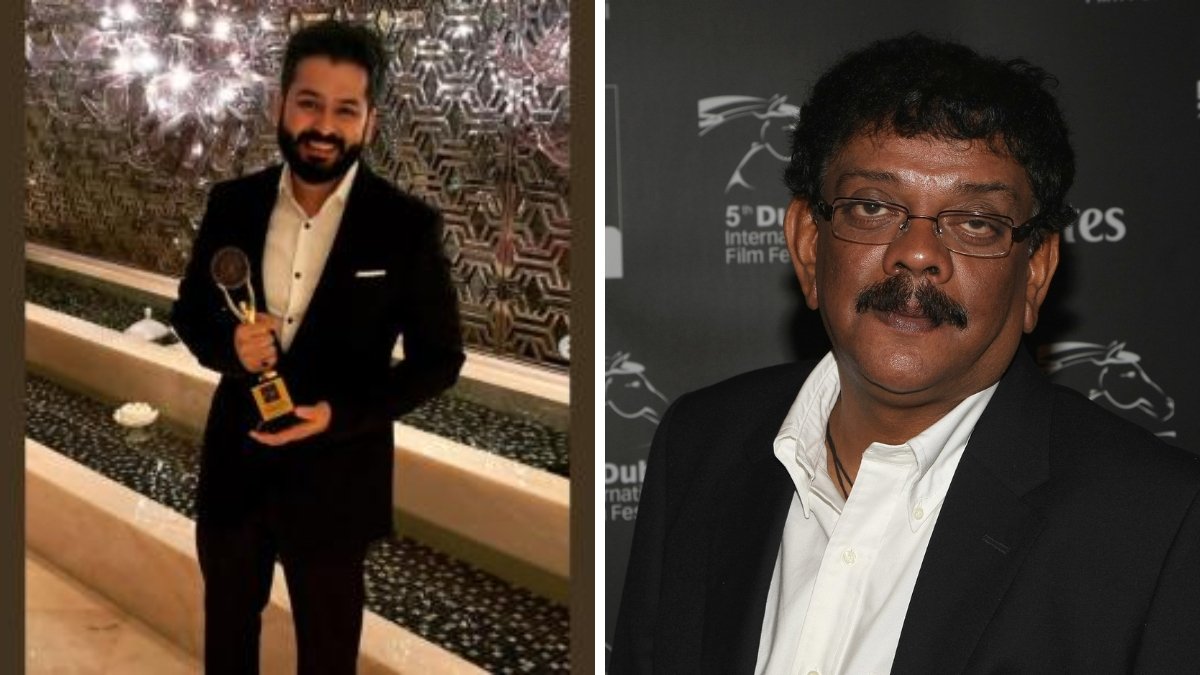
As Dhurandhar 2: The Revenge storms towards the ₹1500 crore mark globally, the conversation has shifted from box office numbers to legacy. In a striking endorsement, veteran filmmaker Priyadarshan has compared the film’s impact to the iconic Sholay—a benchmark rarely invoked in modern Bollywood discourse.
Dhurandhar 2 box office: A historic run rewriting records
The numbers are staggering, but they only tell half the story. Within just 11 days of release, Dhurandhar 2 has already crossed ₹1350 crore worldwide and is now sprinting towards the ₹1500 crore milestone.
Combined with the first installment, the franchise has amassed over ₹2400 crore globally—surpassing even the towering benchmark set by Baahubali. That alone would be headline-worthy. But something deeper is unfolding.
This isn’t just success. It’s dominance.
The first Dhurandhar, led by Ranveer Singh as an Indian spy, had already reset expectations with ₹1300 crore worldwide, including ₹840 crore net in India. The sequel hasn’t just followed up—it has accelerated the trajectory.
And now, it is eyeing the ultimate crown: overtaking Dangal as the highest-grossing Indian film ever.
Priyadarshan on Aditya Dhar: ‘He broke Bollywood’s theory’
For Priyadarshan, this moment is also deeply personal. The filmmaker, who once mentored Aditya Dhar, sees the success as both surprising and inevitable.
“Today, Aditya is motivating me,” he said, reflecting on their journey that began nearly two decades ago. Dhar had assisted him on films like Aakrosh and Tezz, quietly absorbing the craft before making his own mark.
But what stands out in Priyadarshan’s assessment is not just admiration—it’s acknowledgment of disruption.
“He broke the complete theory of Bollywood,” he noted, pointing to how Dhurandhar defied conventional filmmaking rules—whether in storytelling, scale, or execution.
That’s a loaded statement coming from someone who helped define those very conventions.
Dhurandhar vs Sholay: Is the comparison justified?
Invoking Sholay is not casual praise—it’s cinematic shorthand for generational impact. According to Priyadarshan, what Dhar has achieved qualifies.
“That revolution he created is historic. Now he can sleep. He will be remembered like the makers of Sholay.”
It’s a bold claim. But there’s a pattern here.
Historically, Indian cinema has seen a few seismic shifts—Sholay in the 70s, Baahubali redefining scale, and now Dhurandhar reshaping mainstream storytelling economics. Each didn’t just succeed; they changed the rules others followed.
A micro-observation: audiences aren’t just watching Dhurandhar—they’re rewatching it. That repeat value often signals something more durable than hype.
Beyond box office: What makes Dhurandhar a cultural moment?
What separates Dhurandhar from other blockbusters is its refusal to play safe. From its geopolitical narrative to its stylised execution, the film leans into risk—and wins.
More importantly, it reflects a broader shift: the rise of director-led cinema in Bollywood. Unlike the star-driven formulas of the past, Dhurandhar places vision at the centre.
That’s why its success resonates within the industry. It suggests that scale and storytelling—when aligned—can outperform even legacy formulas.
And that’s the real disruption.
Priyadarshan’s return adds another layer
Interestingly, this moment coincides with Priyadarshan’s own return to Hindi cinema. After years focused on Malayalam films, he is set to re-enter Bollywood with Bhooth Bangla, starring Akshay Kumar.
There’s a subtle symmetry here. As one generation redefines the rules, another prepares to re-engage with a changed industry.
As Dhurandhar 2 races towards ₹1500 crore, its biggest achievement may not be the numbers—but the narrative shift it represents. If Priyadarshan is right, this isn’t just a blockbuster moment. It’s a before-and-after moment for Bollywood.