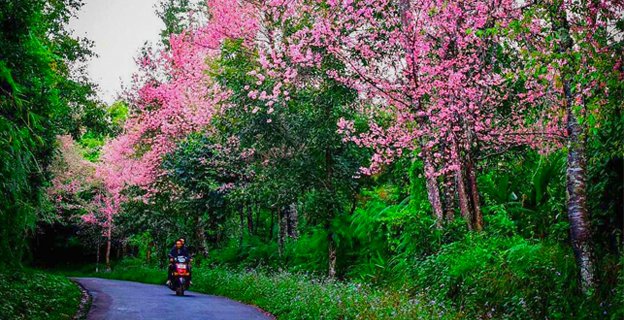
When people think of cherry blossoms, their minds usually travel straight to Japan and its springtime hanami rituals. But there is a quieter, far less crowded place closer home where cherry trees bloom just as beautifully, and at a completely different time of year. In India’s northeast, Nagaland has slowly emerged as one of the country’s most enchanting cherry blossom destinations.
Unlike Japan, where blossoms appear in spring, Nagaland’s cherry trees flower during the winter months, typically between late October and early December. This unexpected timing turns the colder season into a soft, colourful surprise. The heart of this spectacle lies in Kohima, where streets, hillsides and forest patches are dotted with wild Himalayan cherry trees. When the blooms arrive, entire neighbourhoods are washed in shades of pink and white, creating a scene that feels almost unreal.
What makes the experience special is how naturally the cherry trees exist here. Many of them grow wild, blending seamlessly with the surrounding hills and forests rather than being limited to carefully designed parks. The setting feels untouched and peaceful, offering a sense of calm that is often missing at more famous blossom spots.
Another major draw is the absence of overwhelming crowds. Unlike Japan’s packed cherry blossom season, Kohima allows visitors to slow down and truly take in the view. Those visiting Nagaland for the annual Hornbill Festival are often pleasantly surprised to stumble upon this winter bloom, making the trip even more memorable.
During the day, visitors can explore scenic trails lined with blossoms, soaking in not just the beauty but also the culture that surrounds it. In Kohima, cherry blossoms are tied closely to local traditions and modern creative expressions, adding depth to the visual treat.
While you’re there, Puliebadze is worth setting aside time for. This mountain peak in Kohima district is especially stunning during this season. The climb is easy enough for beginners, even children, and the forest trail is filled with winter blooms. Clearly marked paths make the hike comfortable, and the surrounding forest is also home to the rare and shy Blyth’s Tragopan, adding a touch of wilderness to an already magical experience.