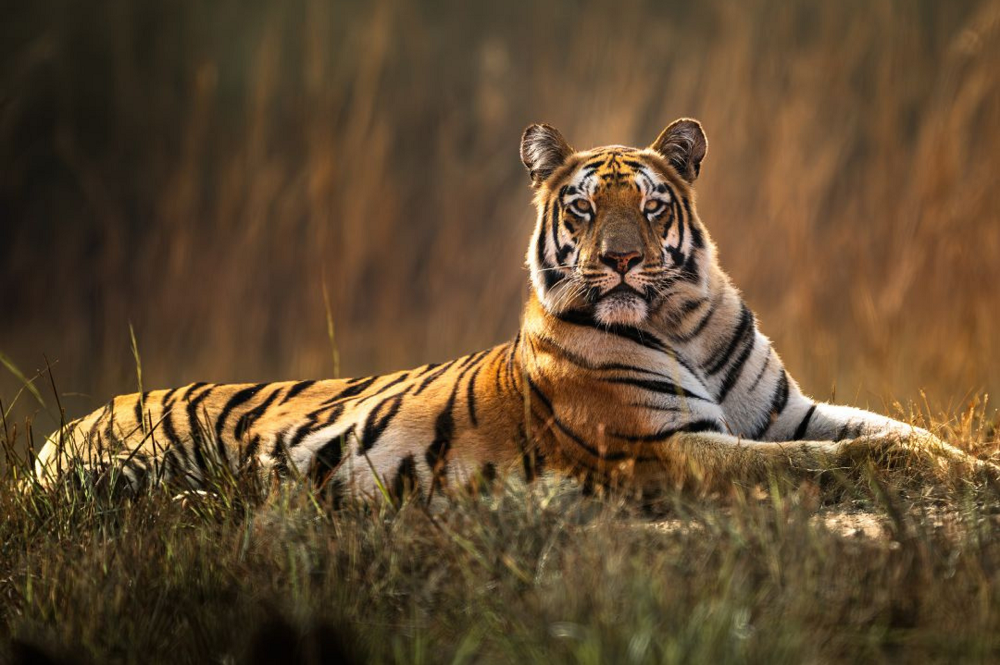
India has the largest population of wild tigers in the world. Among all its states, Madhya Pradesh proudly carries the title of the “Tiger State of India”. The reason is simple—it has the highest number of tigers in the country, as confirmed by the All India Tiger Census.
According to the 2022 Tiger Census, India’s total tiger population rose to 3,682. Madhya Pradesh contributed the largest share, securing its position at the top. With vast forests, varied landscapes, and several well-managed reserves, the state has become a model for wildlife conservation and a dream destination for nature lovers.
Kanha Tiger Reserve is one of the most famous parks in India. Often linked to Rudyard Kipling’s The Jungle Book, Kanha is known for its sal and bamboo forests and rich biodiversity. Visitors frequently spot tigers here, along with barasingha (swamp deer), leopards and wild dogs. Safaris can be booked online, and the best time to visit is between October and June.
Bandhavgarh is known for one of the highest tiger densities in the country. Ancient ruins and forts inside the reserve add a historic charm. Jeep safaris are popular, and photographers are drawn to its dramatic scenery and regular tiger sightings.
Pench, located on the border of Madhya Pradesh and Maharashtra, is another reserve connected to The Jungle Book. Its teak forests and open grasslands make it visually stunning. It is also a paradise for birdwatchers.
Satpura offers a different kind of experience. Visitors can enjoy walking safaris, canoe rides, and camping. With fewer crowds, it provides a quieter and more immersive wildlife experience.
Panna’s story is one of hope. After facing a sharp decline in tiger numbers in the early 2000s, focused conservation and relocation efforts helped revive its population. Today, Panna stands as proof that determined efforts can bring India’s national animal back from the brink.
Together, these reserves make Madhya Pradesh the true tiger capital of India.