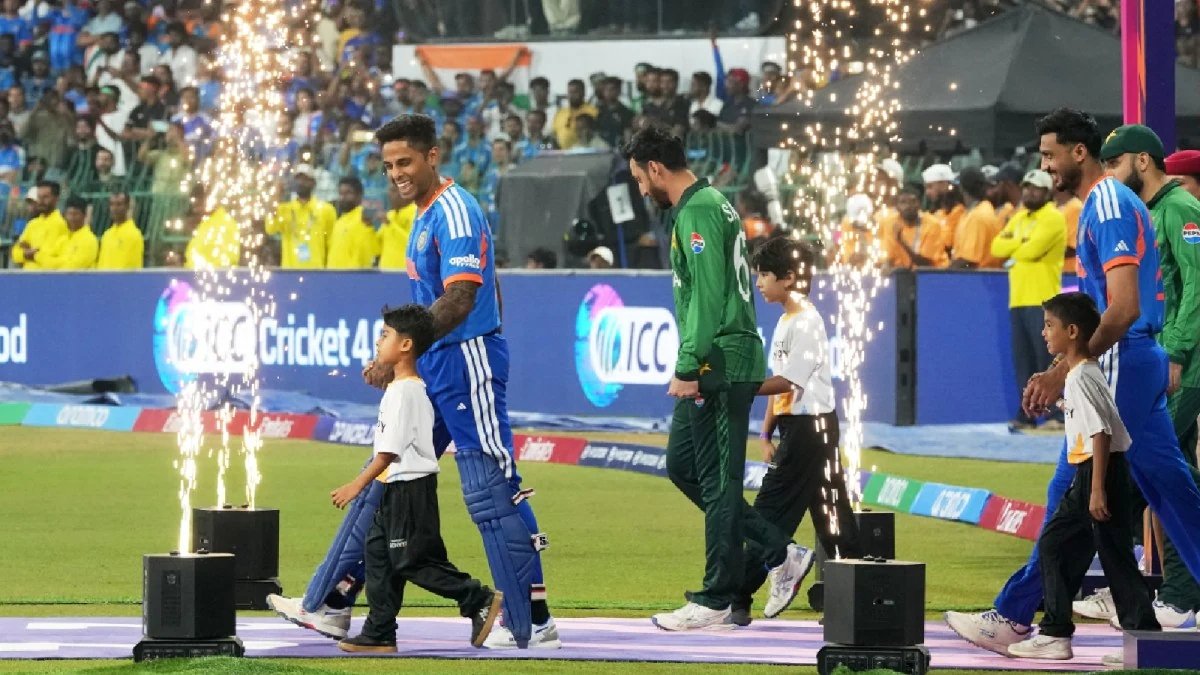
The India-Pakistan cricket rivalry is the most-watched in the sport, transcending boundaries and drawing billions of viewers. Yet when it comes to T20 Internationals—and especially T20 World Cups—the contest has been brutally one-sided. India leads the overall T20I head-to-head 12-3, with one match tied. In T20 World Cups, the dominance is even starker: 7 wins for India, just 1 for Pakistan.
After India’s crushing 61-run victory in the 2026 T20 World Cup, the psychological stranglehold has never been tighter. Here’s the complete breakdown of this lopsided rivalry.
Overall T20I Head-to-Head Record
Total Matches: 16
India Wins: 12
Pakistan Wins: 3
Tied: 1
India Win %: 75%
India’s dominance is undeniable. Of the 16 T20Is played between these two nations, India has won three-quarters. Pakistan’s three victories came in 2007 (T20 World Cup final), 2012 (Asia Cup), and 2021 (T20 World Cup group stage). The tied match occurred in 2007 during a group-stage thriller.
What stands out isn’t just the win-loss ratio—it’s the consistency. India has won the last five consecutive T20Is against Pakistan, dating back to October 2022. Pakistan’s last victory was in the 2021 T20 World Cup in Dubai, when they chased down 152 with 10 wickets in hand. Since then, it’s been all India.
T20 World Cup Record: India’s Fortress
Total World Cup Matches: 8
India Wins: 7
Pakistan Wins: 1
India Win %: 87.5%
T20 World Cups are where India’s supremacy becomes suffocating. Pakistan has managed just one win in eight attempts—a statistical nightmare for a team that prides itself on high-pressure performances.
Key World Cup Results:
- 2007 Final (Johannesburg): Pakistan won by 5 runs (India 152/5, Pakistan 157/5) — Pakistan’s only WC win over India in T20s
- 2012 (Colombo): India won by 8 wickets
- 2014 (Dhaka): India won by 7 wickets
- 2016 (Kolkata): India won by 6 wickets (Virat Kohli’s iconic 55*)
- 2021 (Dubai): Pakistan won by 10 wickets (India 151/7, Pakistan 152/0)
- 2022 (Melbourne): India won by 4 wickets (Virat Kohli 82*)
- 2024 (New York): India won by 6 runs (low-scoring thriller)
- 2026 (Colombo): India won by 61 runs (India 175/7, Pakistan 114 all out)
Since 2007, Pakistan has beaten India just once in World Cups. The 2021 victory was their first-ever against India in any World Cup format (ODI or T20). It sparked celebrations across Pakistan, but the euphoria was short-lived. India bounced back in 2022, 2024, and now 2026 with increasingly dominant performances.
Statistical Breakdown: Who Owns This Rivalry?
Most Runs in IND vs PAK T20Is: Virat Kohli (492 runs)
Kohli is the undisputed king of this fixture. His ability to deliver in high-pressure chases—most notably the 82* in Melbourne 2022 and 55* in Kolkata 2016—cements his legacy as Pakistan’s nemesis.
Most Wickets in IND vs PAK T20Is: Hardik Pandya (15 wickets)
Hardik’s all-round brilliance has been crucial. His knack for breaking partnerships and providing breakthroughs in the Powerplay makes him India’s most valuable weapon against Pakistan. In the 2026 clash at Colombo, he struck with the very first ball, dismissing Sahibzada Farhan for a duck.
Highest Individual Score: Virat Kohli 82* (2022, Melbourne)
Kohli’s masterclass in the 2022 T20 World Cup semifinal chase is the gold standard. Chasing 160, he single-handedly dragged India over the line with an innings that defied physics and logic.
Best Bowling Figures: Bhuvneshwar Kumar 3/15 (2016, Kolkata)
Bhuvneshwar dismantled Pakistan’s top order, setting up India’s comfortable win in the 2016 Asia Cup T20.
Turning Points: When Did India Take Control?
The rivalry tilted decisively in India’s favor after the 2007 T20 World Cup final loss. That defeat—Pakistan’s only T20 WC win over India—sparked a systemic overhaul in India’s white-ball cricket. MS Dhoni’s captaincy philosophy, the emergence of Virat Kohli, and the depth India built in pace and spin bowling transformed them into a T20 powerhouse.
Pakistan, meanwhile, struggled with consistency. Political instability, PSL distractions, and frequent captaincy changes left them tactically fragmented. By the time Babar Azam took over, India had already built an unassailable psychological edge.
The 2021 win gave Pakistan brief hope, but India’s responses in 2022, 2024, and 2026 have been emphatic. The 61-run thrashing in Colombo wasn’t just a win—it was a reminder that the power balance has shifted permanently.
Why Pakistan Struggles Against India in T20s
1. Pressure Handling:
India’s players thrive under the billion-viewer spotlight. Pakistan often crumble. The 2026 match was a textbook example—4 wickets in the Powerplay, all out for 114.
2. Batting Depth:
India’s top-to-bottom batting lineup allows them to absorb early losses. Pakistan’s over-reliance on Babar and Mohammad Rizwan leaves them vulnerable.
3. Death Bowling:
Jasprit Bumrah and Hardik Pandya consistently outbowl Pakistan’s Shaheen Afridi and Haris Rauf in crunch overs.
4. Fielding Standards:
India’s fielding has been miles ahead. Pakistan’s dropped catches and misfields in 2026 (Shadab’s error, fielders losing sight of the ball) cost them dearly.
What’s Next?
India’s 12-3 lead isn’t just a statistic—it’s a statement of structural superiority. Pakistan will continue to talk about “winning on the day,” but the data paints a different picture. Until they fix their top-order fragility, death bowling, and mental approach, India will remain firmly in control.
The next India-Pakistan T20I could come in the Asia Cup or another World Cup. If history is any guide, expect India to start as overwhelming favorites—and expect Pakistan to fall short again.