When you picture a successful country, you probably imagine busy airports, its own printed currency, and strong symbols of independence. But what if a nation had none of these and still ranked among the richest in the world?
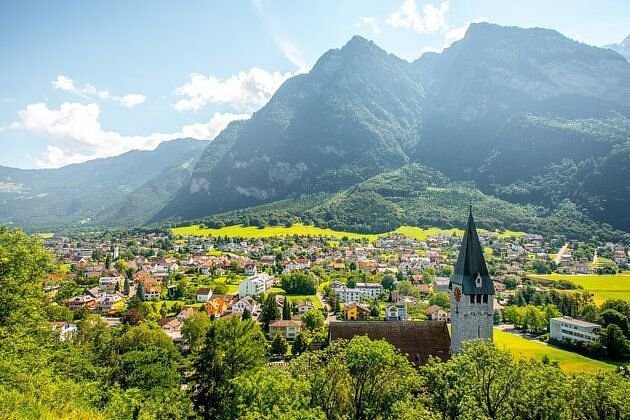
Welcome to Liechtenstein, a tiny yet powerful country tucked between Switzerland and Austria in the Alps.
First surprise: Liechtenstein has no airport. Not even a small one. Visitors must fly into neighboring countries and then drive or take a train across the border. But this isn’t a flaw, it’s practical. The entire country covers just 62 square miles, making an airport unnecessary. Excellent road and rail links connect it smoothly to major European hubs.
Second surprise: it doesn’t have its own currency. Instead, Liechtenstein uses the Swiss franc. Rather than managing its own monetary system, it benefits from the stability of one of the world’s strongest currencies. This makes trade, especially with Switzerland — easy and reliable. What might seem like a missing symbol of sovereignty is actually a smart economic decision.
Despite its small size, Liechtenstein is incredibly wealthy. Its GDP per capita is higher than many much larger nations. The country thrives on manufacturing, banking, and finance. It exports precision instruments, dental products, and advanced machinery around the globe. Its financial sector also attracts international clients, strengthening its economy further.
Life inside the country is equally impressive. Crime rates are extremely low, prisons often have empty cells, and in some cases inmates are housed abroad due to limited facilities. Education, healthcare, and infrastructure are top quality. With such a small population, there’s a strong sense of community and close governance.
Geographically, Liechtenstein is landlocked and even “doubly landlocked”, meaning you must cross at least two countries to reach the sea. Yet instead of isolation, it has built strong economic and cultural ties within the Upper Rhine Valley region.
Though modern and globally connected, Liechtenstein remains a principality ruled by a prince, blending monarchy with democracy. Traditional festivals and Alpine customs remain alive alongside its advanced economy.
Liechtenstein shows that true strength doesn’t depend on airports or printing money, it comes from smart partnerships, stability, and wise governance.