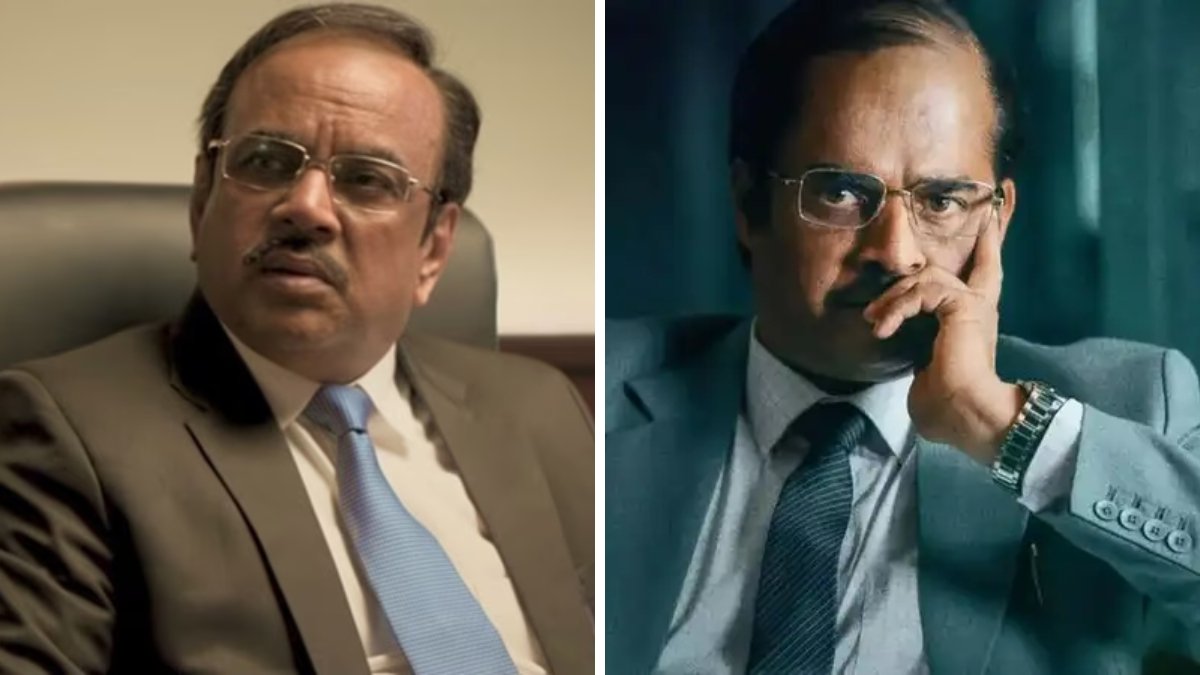
A lighthearted joke from Paresh Rawal has unexpectedly collided with a growing controversy around Dhurandhar, pulling audiences into a debate over performances, sensitivity, and realism. As comparisons with Uri: The Surgical Strike resurface, a viral social media exchange has added fresh fuel to an already heated conversation.
Uri vs Dhurandhar: Why Paresh Rawal’s Response Is Trending
It began with a seemingly simple post on X (formerly Twitter). A user praised Paresh Rawal’s portrayal of a National Security Advisor-inspired character in Uri, noting the absence of a smoking habit often associated with the real-life figure.
Rawal’s response was vintage. “Yes dint smoke but only broke the phones,” he wrote, referencing one of his character’s memorable traits. The line landed instantly. Fans found it sharp, self-aware, and perfectly timed.
But the reaction didn’t stay confined to nostalgia. It quickly turned into a comparison between Rawal’s restrained authority in Uri and R. Madhavan’s more intense portrayal of intelligence officer Ajay Sanyal in Dhurandhar.
One comment likened playing such roles to the legacy of James Bond. Another bluntly declared Madhavan’s performance superior. The debate had begun.
Dhurandhar Controversy Explained: What Happened With Madhavan?
The timing of this comparison is crucial. Dhurandhar, directed by Aditya Dhar, is already under scrutiny for a controversial scene involving Madhavan’s character.
Clips circulating online appeared to show the actor smoking while reciting lines associated with Sikh religious texts. The backlash was swift, particularly from members of the Sikh community who found the imagery inappropriate.
Madhavan responded with a video clarification. He insisted that the cigarette had been put out well before the dialogue delivery and that no smoke or visual cue appeared on screen during the sacred moment.
“It is very pure and sacred for us,” he explained, emphasizing that the team had taken precautions during filming.
Still, in today’s hyper-connected environment, perception often travels faster than intent.
Another Layer: AI Image Controversy Adds Fuel
The situation escalated further when an image surfaced showing another character—played by Ranveer Singh—apparently smoking while wearing a turban.
Director Aditya Dhar stepped in again, clarifying that the image was AI-generated and not part of the film. He reiterated that the team holds deep respect for the Sikh community.
One image. That’s all it took to amplify distrust.
The Bigger Picture: Bollywood’s Evolving Spy Archetype
Beyond the immediate controversy, this moment highlights a broader shift in how Bollywood portrays intelligence figures.
Uri presented a controlled, almost minimalist authority through Paresh Rawal’s character—measured, sharp, and symbolic. Dhurandhar, on the other hand, leans into psychological depth and realism, with Madhavan’s character navigating moral ambiguity.
The difference reflects changing audience expectations.
Today’s viewers don’t just watch. They dissect. They pause frames, question intent, and demand accountability. Especially when religion enters the frame.
That scrutiny didn’t exist at this scale in 2019.
Why This Debate Is Bigger Than Just Two Performances
At its core, this isn’t just about who played an intelligence officer better.
It’s about authenticity versus sensitivity.
It’s about performance versus perception.
And increasingly, it’s about control versus audience interpretation.
Paresh Rawal’s witty throwback may have sparked nostalgia—but it also reopened a conversation Bollywood can no longer ignore.
As Dhurandhar 2 continues its theatrical run, the film’s success now coexists with intense public scrutiny. And if one thing is clear, it’s this: in the age of social media, every scene lives far beyond the screen.