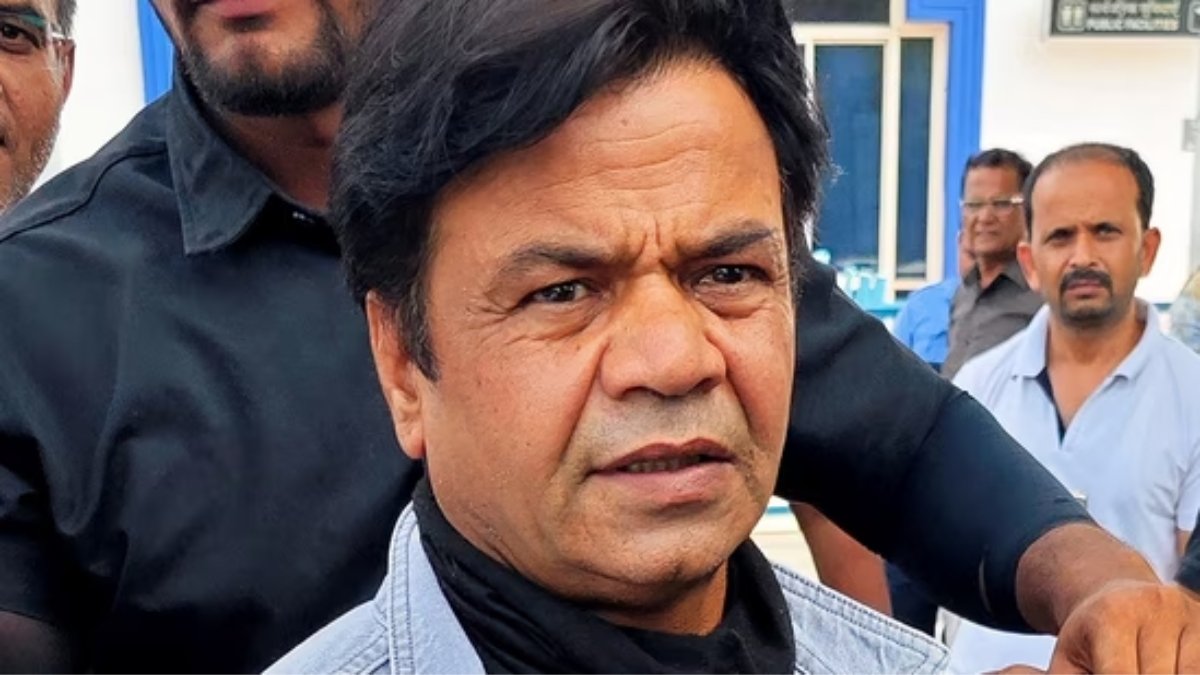
Bollywood actor Rajpal Yadav found himself in the spotlight again after the Delhi High Court reserved its judgment in the long-running ₹9 crore cheque bounce dispute linked to his 2012 film venture. During the tense hearing, the actor made an emotional submission before the court, even saying he was ready to be sent to jail again if required.
Delhi HC Hearing In Rajpal Yadav Cheque Bounce Case
The case was heard by Justice Swarana Kanta Sharma, who appeared visibly dissatisfied with the actor’s shifting stance regarding repayment commitments.
During the proceedings, the judge remarked that the court was receiving inconsistent responses from the actor.
“I am not getting my answers. The undertaking said something else, and now you are saying something else,” the court observed.
The dispute involves a financial claim of nearly ₹9 crore linked to a cheque dishonour complaint filed under Section 138 of the Negotiable Instruments Act. The complainant company argued that despite multiple assurances, the dues remain unpaid.
Appearing for the complainant, advocate Avneet Singh Sikka told the court that the actor had already accepted his conviction earlier and could not now avoid liability.
Settlement Talks Collapse Despite Court Intervention
In an attempt to resolve the matter, the court actively encouraged both parties to explore a negotiated settlement.
According to submissions made during the hearing, the complainant company, Murali Projects Pvt Ltd, agreed to accept ₹6 crore as a full and final settlement — a reduction from the original claim.
But the talks quickly hit a dead end.
Appearing virtually before the court, Rajpal opposed the proposal and argued that he had already faced severe financial distress due to the case. The actor said he had sold five of his flats to repay debts and had already deposited a significant amount.
Then came the moment that caught attention.
“I am not emotional… send me to jail five more times,” the actor told the court during his submission.
Even after this, the court attempted another intervention by suggesting a structured repayment of ₹3 crore within a fixed timeline. However, the judge clarified that the suggestion was merely a judicial attempt to break the stalemate and not a final settlement proposal.
No agreement was reached.
At one point, the court also cautioned the actor about wasting judicial time, remarking:
“Never think the judge weak if the judge is nice to you.”
With both sides unable to resolve the dispute, the court ultimately reserved its judgment.
A decision is now awaited.
How The ₹9 Crore Dispute Began
The legal dispute traces its roots back more than a decade.
In 2010, Rajpal Yadav borrowed ₹5 crore from the Delhi-based firm Murali Projects Pvt Ltd to finance his directorial venture, the film Ata Pata Laapata.
The satirical drama, released in 2012, failed commercially at the box office. The financial losses soon triggered a dispute between the actor and the lending company.
The case escalated legally in 2018 when a magisterial court convicted Rajpal Yadav in a cheque dishonour case under the Negotiable Instruments Act, sentencing him to six months of imprisonment.
The conviction was later upheld by a sessions court in 2019.
Over the years, interest and penalties increased the outstanding liability to roughly ₹9 crore.
This kind of dispute is not unusual in the Indian film industry, where actors sometimes finance passion projects through private borrowing. When a film fails commercially, the financial repercussions can stretch for years — and occasionally land in courtrooms.
This one has lasted nearly 14 years.
Bail History And Recent Court Developments
Rajpal Yadav had earlier been granted interim bail in the matter after depositing money against the bounced cheque amount.
During a previous hearing, the Delhi High Court directed the actor to deposit ₹1.5 crore before granting interim relief. After the complainant confirmed the deposit into its bank account, the court granted bail subject to a ₹1 lakh bond and one surety.
The actor was released from jail on February 16.
However, the broader legal dispute remains unresolved, which is why the court was hearing the revision petition challenging aspects of the earlier conviction and liability.
With negotiations failing, the final outcome will now depend on the High Court’s judgment.
The Rajpal Yadav cheque bounce case highlights how a film project gone wrong can evolve into a prolonged legal battle. With the Delhi High Court now reserving its verdict, the actor’s financial and legal future in the case will hinge on the court’s final ruling.