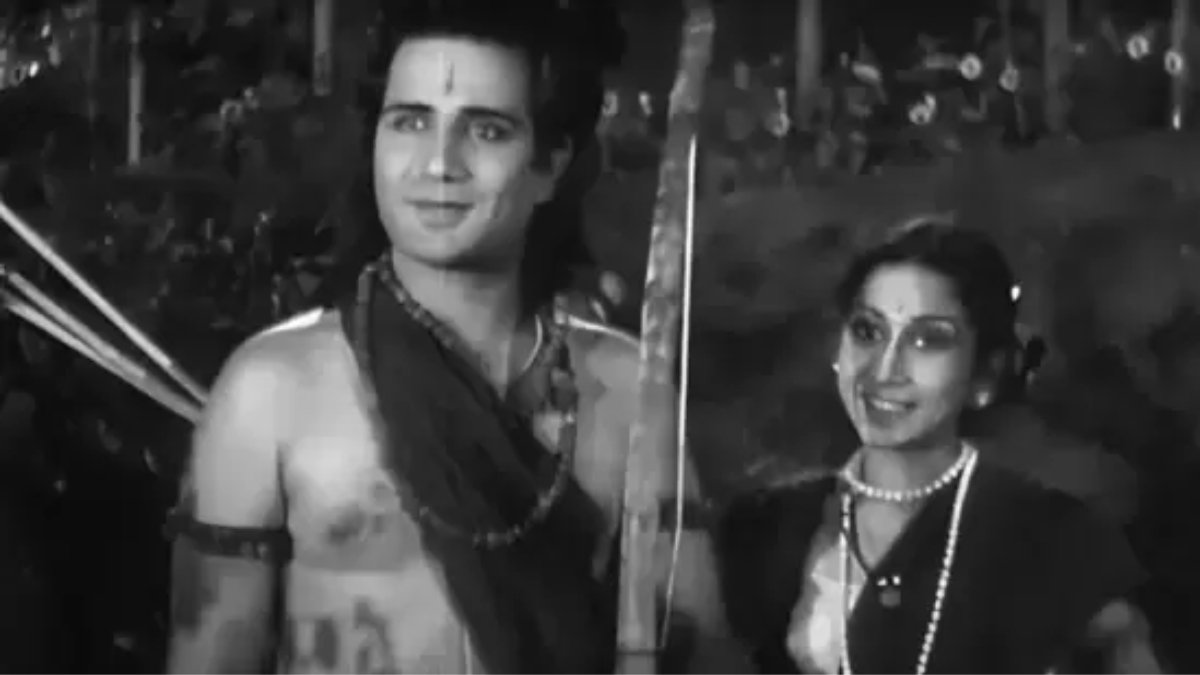
When the first glimpse of Ranbir Kapoor as Lord Rama from Ramayana drops on April 2, it won’t just mark the beginning of a massive new Bollywood spectacle. It will also quietly revive a fascinating cinematic circle. Nearly nine decades ago, another Kapoor — the legendary Prithviraj Kapoor — stepped into the role of Rama in one of Indian cinema’s earliest Ramayana films.
Ranbir Kapoor’s Ramayana teaser begins a new chapter
Promotions for director Nitesh Tiwari’s ambitious Ramayana adaptation are set to begin in earnest with the unveiling of the first “Rama glimpse” on April 2. The teaser will introduce audiences to Ranbir Kapoor’s interpretation of Lord Rama — a role that has been portrayed by numerous actors across more than a century of Indian storytelling on screen.
The film is positioned as one of the most ambitious mythological projects in modern Indian cinema. Produced by Namit Malhotra, the two-part epic features an ensemble cast including Yash as Ravana, Sai Pallavi as Sita, Ravie Dubey as Lakshmana, and Sunny Deol as Hanuman.
But while the teaser focuses on the future of mythological cinema, the casting of Ranbir Kapoor unexpectedly echoes a story from Bollywood’s earliest decades.
A story that began in 1934.
The first major Ramayana talkie featured a Kapoor too
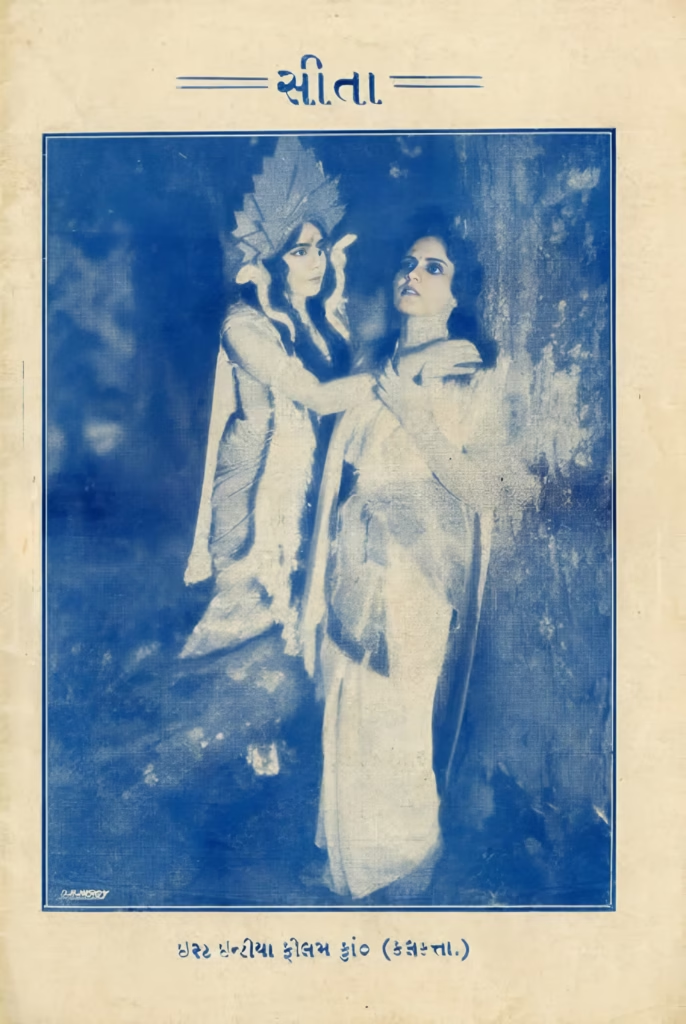
In 1934, filmmaker Debaki Bose created one of the earliest cinematic adaptations of the Ramayana with the film Seeta. The movie was based on the Uttar Kaand of the epic and arrived at a pivotal moment in film history — just three years after India entered the era of sound cinema with Alam Ara.
“Seeta” was among the first Bengali talkies but quickly reached a wider audience after releasing in Hindi as well. At a time when language barriers often limited a film’s reach, the movie traveled across regions and became one of the earliest Indian films to achieve cross-language popularity.
Its global recognition was equally remarkable. The film premiered at the prestigious Venice Film Festival in 1934, becoming the first Indian talkie screened at the festival and earning a diploma award for director Debaki Bose.
For Indian cinema, still in its infancy, that international spotlight was a milestone.
Prithviraj Kapoor’s Lord Rama and the start of a dynasty
The role of Lord Rama in Seeta was played by a young 28-year-old Prithviraj Kapoor. Already gaining recognition after appearing in Alam Ara, Kapoor’s performance in the mythological drama further cemented his reputation as a rising star of early Indian cinema.
The film also featured an early appearance by his younger brother Trilok Kapoor, who played Luv — making it one of the earliest instances of the Kapoor family appearing together in a mythological narrative.
Alongside Kapoor, the film introduced audiences to Durga Khote as Sita. It marked her first appearance outside Marathi cinema and proved to be a breakthrough. She later became one of Hindi cinema’s most respected character actors, appearing in classics like Mughal-e-Azam, Bobby, Karz and Abhimaan.
Prithviraj Kapoor would go on to shape Indian theatre and cinema in profound ways. He founded the iconic Prithvi Theatre and later appeared in landmark films such as Sikandar, Awara and Mughal-e-Azam.
His legacy would expand even further through his sons — Raj Kapoor, Shammi Kapoor, and Shashi Kapoor — who became some of the biggest stars of Hindi cinema.
A Kapoor returns to Lord Rama nearly 90 years later
Today, nearly nine decades after Prithviraj Kapoor’s portrayal, the role of Lord Rama returns to the Kapoor lineage with Ranbir Kapoor — the grandson of Raj Kapoor.
It’s an unexpected cinematic full circle.
Across generations, the Kapoor family has shaped Indian cinema through romance, drama, theatre, and blockbuster spectacle. Now, with Nitesh Tiwari’s upcoming Ramayana, the dynasty revisits one of its earliest mythological connections.
Sometimes, film history has a sense of symmetry.
As audiences prepare to see Ranbir Kapoor’s first look as Lord Rama, the moment carries more than just blockbuster anticipation. It also reconnects modern Bollywood with one of its earliest mythological milestones — proving that cinema’s longest stories often unfold across generations.
ALSO READ: