Hidden in the heart of Southeast Asia, Laos is a country that many are only now beginning to notice. Officially called the Lao People’s Democratic Republic, it stands out as the only nation in the region without a coastline, yet it offers a unique mix of nature, culture, and growth potential.
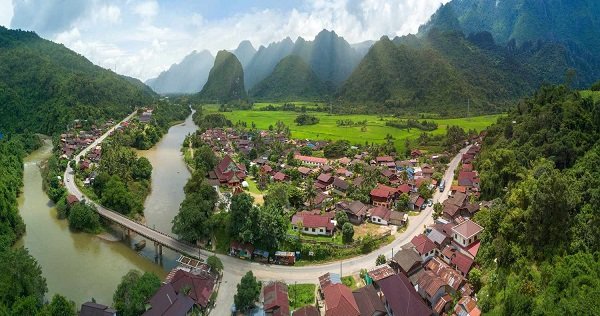
Laos is surrounded by powerful neighbours. It shares borders with China to the north, Vietnam to the east, Cambodia to the south, Thailand to the west, and Myanmar to the northwest. Spread across around 236,800 square kilometres, the country is largely covered with mountains, forests, and hills, making its landscape both rugged and scenic.
Running along much of its western side is the Mekong River, which plays a crucial role in daily life. It supports farming, fishing, and transport, acting as a lifeline for many communities. Laos experiences a tropical monsoon climate, with heavy rains from May to November and a dry, warmer period from December to April.
As of mid-2026, Laos has a population of about 7.9 million people, making it one of the less densely populated countries in Southeast Asia. With roughly 35 people per square kilometre, large parts of the country remain untouched and peaceful. Most people belong to the Lao Loum group, while other communities such as Lao Theung and Lao Soung add to its cultural diversity. The population is also quite young, with a median age of around 25.
Culture in Laos is deeply shaped by Theravada Buddhism. Temples, known locally as “wats,” are spread across the country, reflecting its spiritual roots. The historic town of Luang Prabang is especially famous for its temples and heritage, earning recognition as a UNESCO World Heritage Site. Festivals like Pi Mai, the Lao New Year, along with boat races and religious celebrations, are an important part of everyday life. The official language is Lao, which is closely related to Thai.
Economically, Laos is still developing, with agriculture playing a major role. Around 80% of the population relies on farming, growing crops such as rice, corn, coffee, tobacco, and cotton. At the same time, hydropower has become a key export, with electricity supplied to neighbouring countries like Thailand and China. Tourism is also growing quickly, supported by better connectivity, including the China-Laos railway.
The country is governed by a one-party system under the Lao People’s Revolutionary Party, and its capital, Vientiane, sits along the Mekong River.
With its natural beauty, rich traditions, and ongoing development, Laos is slowly but steadily emerging as a country to watch in the coming years.