In today’s digital world, screens have become a regular part of children’s daily routines. Whether it’s attending online classes, completing homework, playing games, or watching videos, many school-going children spend several hours each day using phones, tablets, laptops, or televisions. While technology has made learning easier and more accessible, medical experts are increasingly worried about the impact excessive screen time is having on children’s eye health.
According to eye specialists, children’s eyes are still developing, which makes them more sensitive to prolonged exposure to digital screens. Experts say they are noticing a growing number of young students experiencing problems such as eye strain, dryness, headaches, and difficulty focusing. In some cases, doctors are also seeing early signs of myopia, or nearsightedness, at younger ages than before.
Medical experts explain that the issue is not just the use of screens but the long, uninterrupted hours children spend looking at devices from a very close distance. With digital devices becoming part of schoolwork, homework, entertainment, and even social interaction, children often spend much of their day in front of screens without realizing the strain it places on their eyes.
One major reason behind these problems is reduced blinking. Experts say that when people use screens, their blinking rate drops significantly — sometimes by as much as half. Blinking normally helps keep the eyes moist and comfortable. When blinking decreases, it can lead to dryness, irritation, headaches, and trouble concentrating.
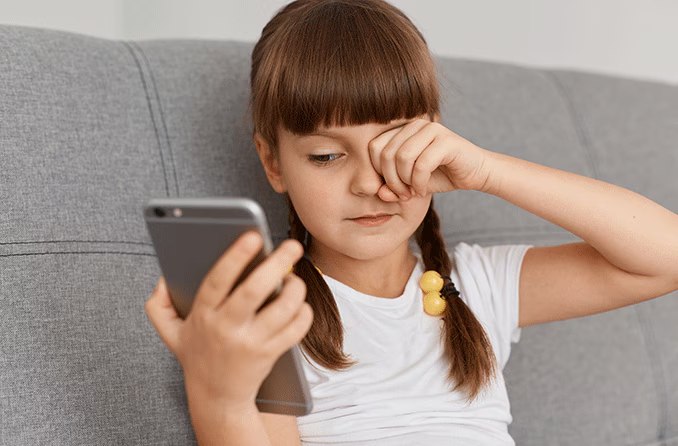
Another challenge is that children do not always clearly express when their eyes are uncomfortable. Instead, parents may notice subtle signs of eye strain. Experts say children who frequently rub their eyes, squint, move closer to screens, or appear distracted while studying may actually be experiencing vision problems.
Doctors are also noticing that symptoms once seen mostly in adults are now appearing in much younger children. Some kids as young as five or six are reporting eye discomfort, dryness, and fluctuating vision after spending long hours on digital devices.
So how much screen time is safe? Medical experts suggest that younger children should ideally limit recreational screen use to about one hour a day, while older children should try not to exceed two hours outside of school-related work. They also emphasize that long, continuous sessions should be avoided.
One commonly recommended method to reduce eye strain is the 20-20-20 rule. This means that after every 20 minutes of screen use, children should look at something about 20 feet away for at least 20 seconds. This simple habit helps relax the eye muscles and reduces fatigue.
Experts also recommend maintaining a proper viewing distance. Screens should be placed about 18 to 24 inches away from the eyes and slightly below eye level. Good lighting in the room is equally important to reduce strain.
Outdoor activity is another important factor for healthy vision. Spending time in natural daylight helps support normal eye development and can reduce the risk of vision problems. Parents are also advised to encourage proper posture and avoid letting children lie down while using screens.
While digital devices will continue to play a major role in education and daily life, experts say that managing how children use them can make a big difference. Setting screen-time limits, encouraging regular breaks, promoting outdoor play, and scheduling timely eye check-ups can help protect children’s eyesight as they grow.