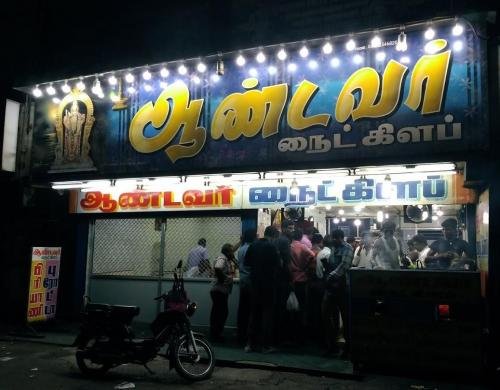
In Thoothukudi, a coastal district in Tamil Nadu, the words “night club” mean something completely different. Walk down almost any busy street here and you’ll spot five or six night clubs standing next to each other — but don’t expect music, dance floors, or alcohol. These night clubs are actually humble parotta shops, serving hot meals late into the night.
For locals, there’s nothing strange about it. In fact, the term “night club” is more commonly used than “hotel” when referring to places to eat. What makes it even more surprising is the price, you can enjoy a full, filling meal for as little as ₹50.
This unusual naming has deep roots in Thoothukudi’s history. The district was once a major port city, with ships coming in and out at all hours. Port workers, railway employees, ship crews, and even British officials often worked night shifts and needed affordable food late at night.
To meet this demand, eateries began operating only after sunset. These parotta shops would open around 6 pm and stay open until nearly 3 am. After long shifts, workers would gather there to eat, rest, and catch up before heading home.
During the British period, the word “club” was commonly used to describe places where people met, ate, and socialised. Over time, these late-night food joints naturally picked up the name “night club,” even though they had nothing to do with entertainment or nightlife as we know it today.
Though parotta is now available throughout the day in Thoothukudi, the name has stuck. Today, these “night clubs” are more than just eateries, they are a reminder of the city’s working-class roots, colonial influence, and rich food culture. What started as a practical solution for night workers has become a unique culinary identity that still defines Thoothukudi.